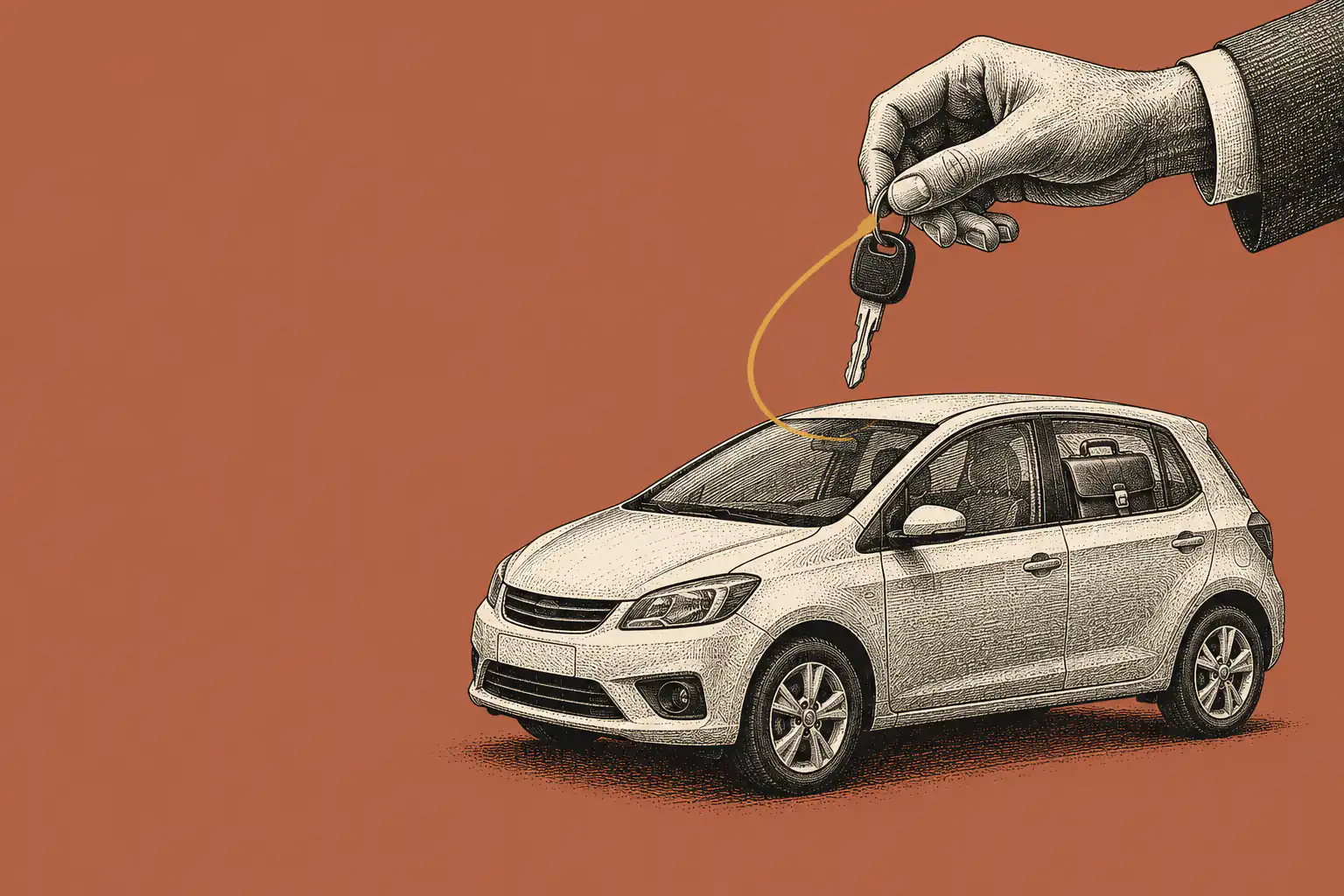
North Carolina Hired and Non-Owned Auto Coverage
North Carolina requires each vehicle rented to the public to carry liability insurance covering the renter, lessee, and their agents and employees while performing their duties. In a lawsuit, vehicle registration is also prima facie evidence of owner permission and control, a fact that matters when employees use company or borrowed vehicles.
What Is Hired and Non-Owned Auto Insurance?
Hired and non-owned auto (HNOA) liability protects the business when rented cars or employees’ own cars are used for work. It does not pay for damage to those vehicles, and it is not a substitute for commercial auto on vehicles the business owns. Read the national Hired and non-owned auto guide.
What to Watch for With Hired and Non-Owned Auto in North Carolina
A commercial rental must carry liability insurance
G.S. 20-281 requires each rented or leased vehicle to be covered for the owner and renter, and their agents and employees while performing duties. Ask how the rental contract’s insurance coordinates with your hired-auto policy and whether the employee is an authorized driver. 1
Registration creates a rebuttable evidence issue
In a North Carolina motor-vehicle lawsuit, proof of ownership is prima facie evidence of permission, while registration can be prima facie evidence of ownership, control, owner benefit, and employment scope. Keep trip-purpose and authorization records and ask the broker whether HNOA responds to alleged employer liability. 2
The rental statute sets its own minimums
G.S. 20-281 specifies $50,000 per injured person, $100,000 per accident, and $50,000 property damage for covered rentals. These are rental-company minimums, not a recommended limit for your employer’s exposure; compare them with your own limits. 1
Providers With North Carolina License Records
These providers publish a national listing for Hired and non-owned auto; the license records below name the licensed entities and roles. Some records rely on company-reported information rather than independent regulator verification. A national listing does not confirm the product is available in North Carolina. Check the regulator’s license lookup and confirm state availability for your business when requesting a quote.
Corgi
Corgi Insurance Services, Inc.
Corgi’s company producer-license table lists 50 jurisdictions: 49 states and the District of Columbia, including DC license 3003091619. New Mexico does not appear in the table and is not included here; the omission does not establish that Corgi is unlicensed there. The company-reported table has no stated as-of date and does not establish product availability. 13
Corgi lists hired and non-owned auto liability for employees using rented or personal vehicles for company business.
Who Regulates Insurance in North Carolina?

North Carolina Department of Insurance
The North Carolina Department of Insurance administers insurance laws, licenses insurance producers and companies, reviews insurance filings and handles consumer complaints. The Commissioner is elected statewide. 3,4,5,6
Surplus-Lines Tax and Stamping Office in North Carolina
Reported tax rate. 5% of gross premium, less return premium, plus 0.4% NC Stamping Office fee for ordinary filed placements 7,8,9,10
When North Carolina is the insured’s home state, surplus-lines tax is 5% of gross premium less return premium; ordinary broker-placed filings also carry a 0.4% stamping fee, while risk-purchasing-group and independent-procurement filings follow separate procedures. A diligent search is generally required; an exempt commercial purchaser may bypass it only after the broker discloses the admitted-market protection difference and receives the purchaser’s subsequent written request. The policy warns that the state guaranty or solvency fund will not pay surplus-lines losses.
North Carolina Surplus Lines Association / NC Stamping Office
Questions to Ask Before You Buy Hired and Non-Owned Auto in North Carolina
- Does our hired-auto policy apply after the liability insurance required by G.S. 20-281 responds to a company rental?
- What records should we keep to show whether an employee’s trip was authorized and for company benefit?
- Are employees and temporary workers protected as authorized drivers on the rental contract?
Hired and Non-Owned Auto Insurance in North Carolina: FAQ
Does North Carolina require rental cars to have liability insurance?
Yes. G.S. 20-281 requires each vehicle rented or leased to the public to carry liability coverage for the owner, renter or lessee, and their agents and employees while performing duties. 1
Can North Carolina presume an employee had permission to drive a vehicle?
A lawsuit may use proof of vehicle ownership as prima facie evidence of owner permission; registration can also support a prima facie showing of control and employment scope under G.S. 20-71.1. 2
Hired and Non-Owned Auto Insurance Guides for Other States
 Alabama
 Alaska
 Arizona
 Arkansas
 California
 Colorado
 Connecticut
 Delaware
 District of Columbia
 Florida
 Georgia
 Hawaii
 Idaho
 Illinois
 Indiana
 Iowa
 Kansas
 Kentucky
 Louisiana
 Maine
 Maryland
 Massachusetts
 Michigan
 Minnesota
 Mississippi
 Missouri
 Montana
 Nebraska
 Nevada
 New Hampshire
 New Jersey
 New Mexico
 New York
 North Dakota
 Ohio
 Oklahoma
 Oregon
 Pennsylvania
 Rhode Island
 South Carolina
 South Dakota
 Tennessee
 Texas
 Utah
 Vermont
 Virginia
 Washington
 West Virginia
 Wisconsin
 Wyoming
Other coverage in North CarolinaEvery coverage guide for North Carolina, plus the regulator and surplus-lines details.


